




GCN are the UK’s largest native newt and can grow up to 17cm. They have three distinctive features that distinguish them from the other two native newts (Smooth & Palmate newt). These features are;
- Black ‘warty’ skin
- Full orange/yellow belly with irregular black spots
- During the breeding season males have a jagged crest running from the head to the back with a break at the base of the tail. The crest then continues. Males also have a distinctive white stripe on the tale during the breeding season.
Great crested newts (GCN) are protected under UK and European legislation:
- Wildlife & Countryside Act (as Amended) 1981: Schedule 5
- The Conservation of Habitats and Species (Amendment) (EU Exit) Regulations 2019: Schedule 2
To summarise, you would be breaking the law by;
- capturing, killing, disturbing or injuring great crested newts deliberately
- damaging or destroying a breeding or resting place
- obstructing access to their resting or sheltering places (deliberately or by not taking enough care)
- possessing, selling, controlling or transporting live or dead newts, or parts of them
- taking great crested newt eggs
If ponds are within 500m of the project site then a GCN survey will have to be performed. Prior to starting a pond survey, a Habitat Suitability Index (HSI) survey will be performed to detect the likelihood of GCN present in a pond. This survey, for planning purposes is not enough to gain a favourable application but it a tool that will be used to help the application. GCN surveys are generally carried out between mid-March to mid-June when they return from their over wintering refuge such as logs, stones and stone walls to their chosen ponds to breed. A minimum of four surveys are required with two of the surveys been between mid-April to mid-May. If GCN are detected then six surveys will be carried out with three been between mid-April to mid-May.
Survey Methods;
Habitat Suitability Index (HSI) surveys
The HSI for great crested newts (GCN) is a measure of habitat suitability. The purpose of this assessment is to carry out a detailed inspection of the ponds, other water bodies and surrounding habitats within 500 metres of the proposed development site using the HSI methodology by Oldham et al. 2000
Environmental DNA (eDNA) analysis – NEW
eDNA testing is a technique used to determine the Presence/Absence of Great Crested Newts (GCN) in ponds during the breeding season (April-June). It involves taking water samples of the pond/s in question at multiple sample points. The samples are sent for laboratory analysis.
Presence/absence surveys
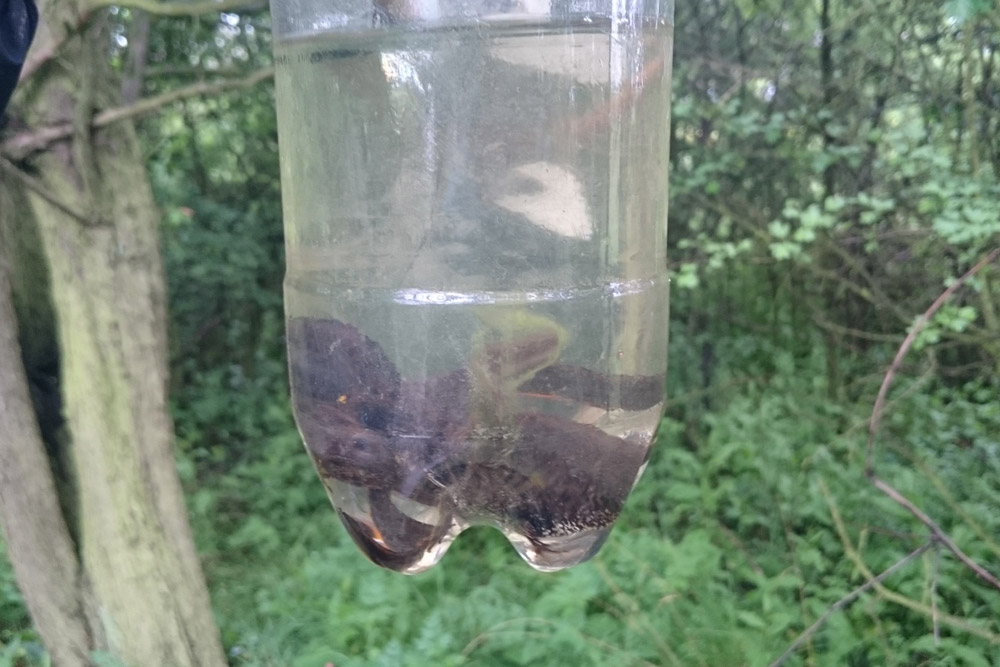
• Bottle trapping – involves placing modified 2L plastic bottles around the pond edge. They are left overnight and any GCN are recorded and released the following morning,
• Torch survey – A high powered torch is used to look for GCN when it is suitably dark.
• Egg search – Suitable vegetation around the pond edge is examined for GCN eggs.
• Netting – This method is used if one of the above three cannot be. It is especially useful in turbid ponds.
• Refuge search
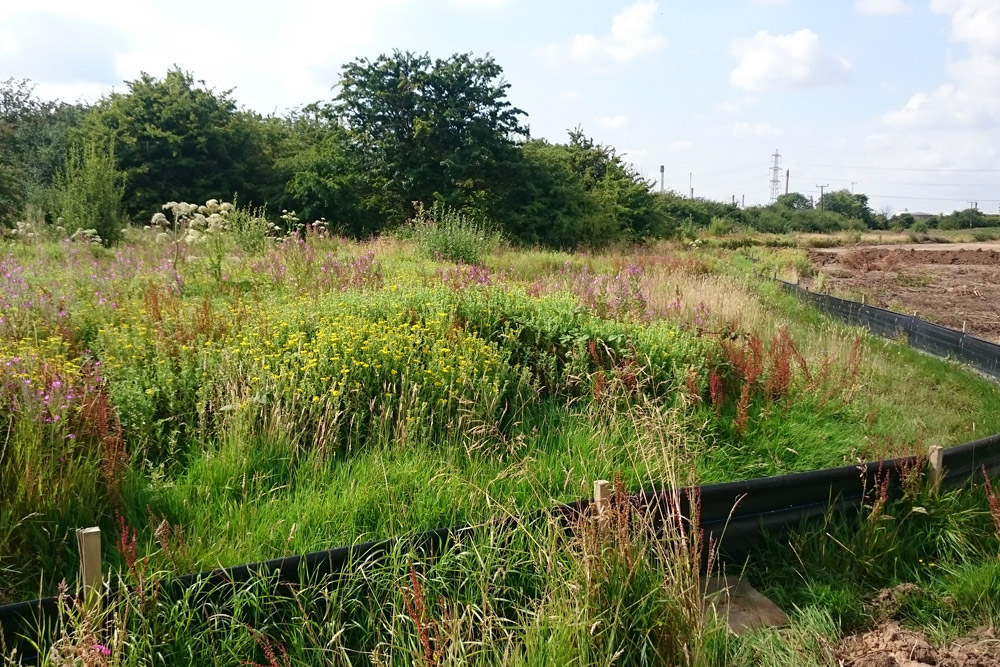
Mitigation – habitat creation, trapping, translocation and site supervision are the main methods used if GCN are present on a project site.
Further information;
https://www.gov.uk/great-crested-newts-surveys-and-mitigation-for-development-projects
Downloads;
Ecological Survey Calendar – Download Here
Mitigation Calendar – Download Here